Interlocking Pavers vs. Concrete: Which Should You Choose?
Two of the most common patio and driveway surface options in Durham Region are interlocking pavers and poured concrete. Each has real advantages, and real trade-offs. Here's an honest comparison.
Interlocking Pavers
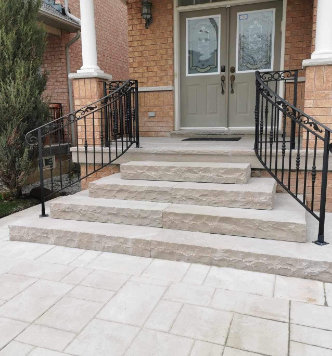
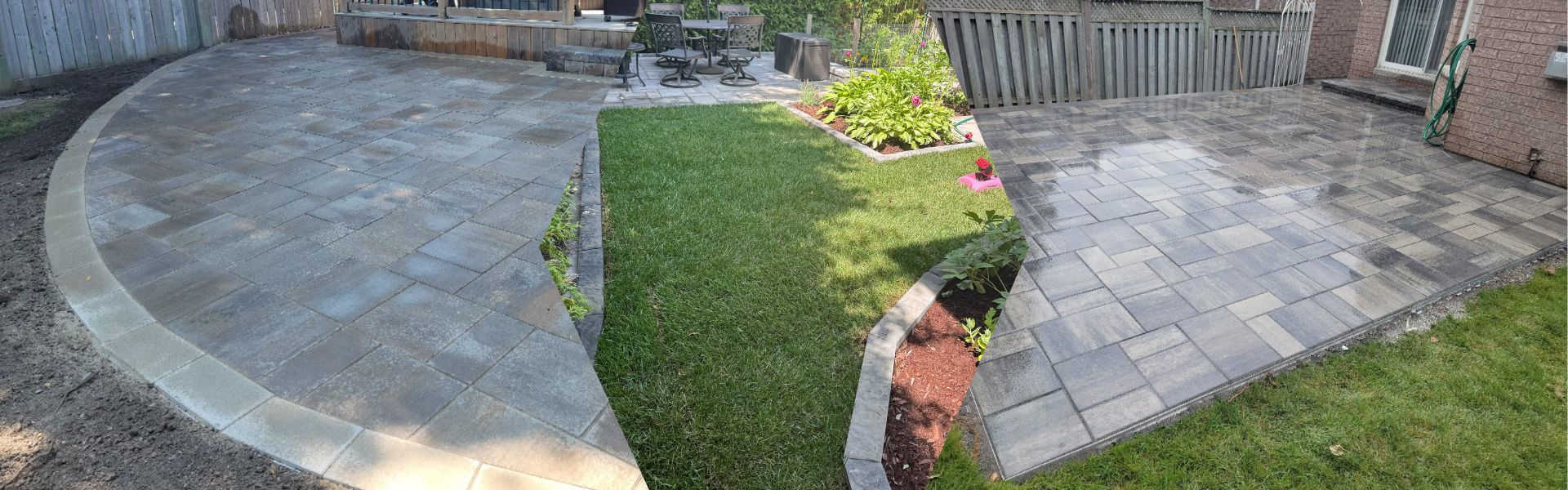
Interlocking pavers are individual units (concrete, natural stone, or clay brick) set on a compacted aggregate base with sand bedding and locked together with polymeric jointing sand.
Advantages:
- Individual units can be removed and replaced. One cracked paver doesn't mean a full tear-out
- Freeze-thaw movement is distributed across joints rather than cracking the surface
- Wide range of colours, patterns and finishes
- Permeable paver options available for drainage
Disadvantages:
- Higher upfront material and installation cost than basic concrete
- Joint sand requires occasional replenishment
- Weeds can establish in joints if polymeric sand fails
Poured Concrete
Poured concrete is a monolithic slab: mixed, formed, poured and finished on site.
Advantages:
- Lower upfront cost
- Seamless look (some homeowners prefer it)
- Very low maintenance once cured
Disadvantages:
- Cracks from freeze-thaw are common in Ontario within 10–15 years
- Repairs are visible. Colour-matching is difficult
- Full replacement required when surface fails
- Limited design flexibility
Which Lasts Longer in Ontario?
Ontario's freeze-thaw cycle is hard on poured concrete. A properly installed interlock system on a deep aggregate base (8–12") will typically outlast a poured concrete slab by 10–20 years. The jointed nature of interlock allows for movement; concrete resists and eventually cracks.
Verdict
For driveways and patios in Durham Region, interlocking pavers are the better long-term value in most cases. The higher upfront cost pays off in lower repair costs and longer lifespan.
Contact us for a free quote on your driveway or patio project.