If you live somewhere with real winters, like most of Ontario, your patio faces a brutal annual cycle of freezing and thawing. Water seeps into tiny gaps, freezes, expands, and slowly tears materials apart. Choosing the wrong patio material in a cold climate means cracks, heaving, and replacement far sooner than you'd expect.
The good news is that some materials are exceptionally well-suited to cold climates. Combined with proper installation, they'll deliver decades of reliable performance.
Why Freeze-Thaw Matters
Freeze-thaw cycles are the single biggest threat to patios in cold climates. Each time water freezes, it expands by about 9%. In a porous or rigid material, that expansion creates internal pressure that leads to cracking, spalling, and surface damage over time.
The best cold-climate patio materials either resist water absorption, flex with ground movement, or both.
Best Patio Materials for Cold Climates
Interlocking Concrete Pavers
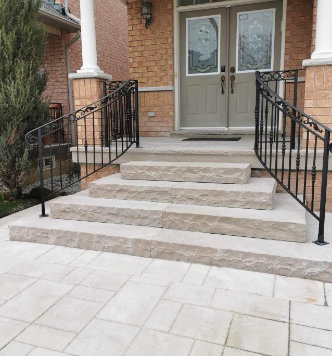
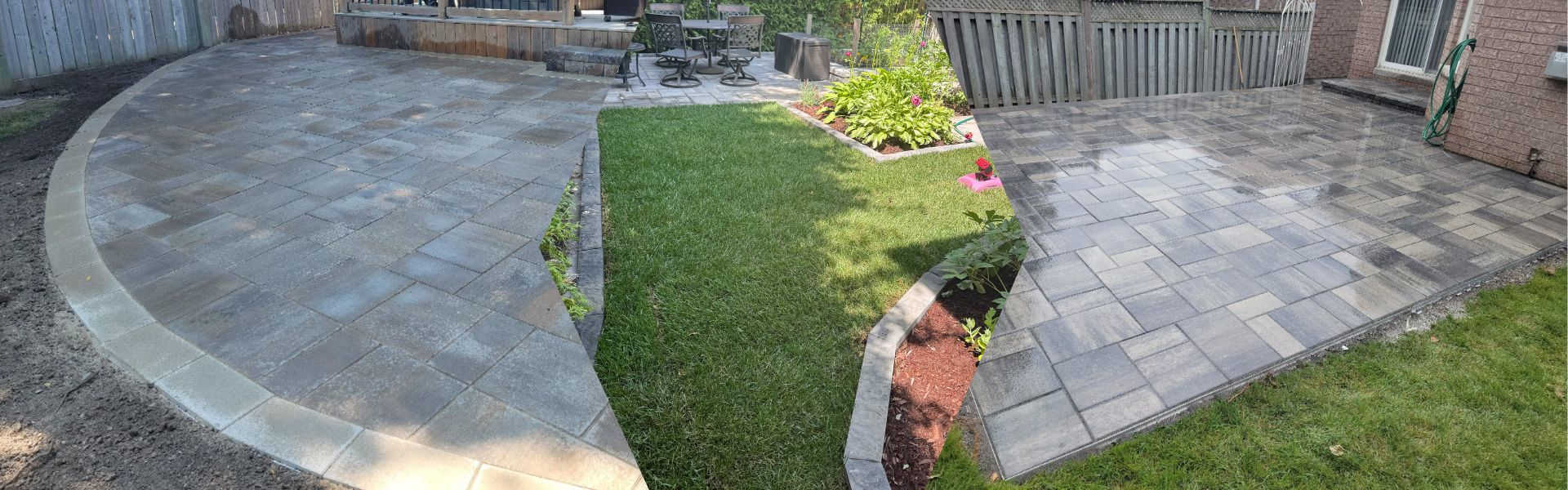
Interlocking pavers are arguably the best choice for cold climates. Because they're set as individual units on a flexible base, they move with frost heave rather than cracking. If a single paver is ever damaged, it can be replaced without disturbing the rest.
- Excellent freeze-thaw performance
- Flexible system that accommodates ground movement
- Easy spot repairs
- Wide range of shapes, colours and textures, including styles that mimic natural stone
- Generally more affordable than natural stone
Natural Stone
Natural stone gives a patio character that manufactured products can't fully copy, since every piece is different. Dense stones absorb little water, which is what matters most in a freeze-thaw climate.
- Granite is one of the hardest, most durable options and resists scratching and staining, at a premium price.
- Limestone offers a refined, consistent look, is widely available in Ontario, and holds up well to freeze-thaw cycles when properly installed.
- Flagstone is a flat, layered stone with an irregular, organic look that suits natural gardens and curved layouts. It performs best when set with careful attention to drainage.
What natural stone offers:
- Outstanding durability and lifespan
- Low water absorption in dense varieties
- Timeless, premium appearance
Porcelain Pavers
Large-format porcelain pavers have become increasingly popular. They absorb almost no water, making them highly resistant to freeze-thaw damage, and they offer a sleek, modern look.
Materials to Approach with Caution
- Poured concrete slabs are rigid, so frost heave and settling show up as cracks. They can work, but a cracked slab can't be repaired as invisibly as a single paver can be replaced. Our comparison of interlocking pavers vs concrete goes deeper.
- Low-quality or highly porous stone absorbs water and can spall or crack after repeated freeze-thaw cycles.
Stepping Stones and Accent Materials
Stepping stones connect patio areas and run paths through gardens without the cost of a full hardscape surface. They can be natural stone, precast concrete or large-format porcelain. Gravel, river rock and decomposed granite between stepping stones add texture and help water drain.
Installation Is Everything
Even the best material will fail in a cold climate if it's installed poorly. The keys to a long-lasting cold-climate patio are:
- A compacted aggregate base that drains water away and resists frost heave. Guidance from the Concrete Masonry & Hardscapes Association calls for at least 100 mm (4 inches) under patios and walkways and 150 mm (6 inches) under residential driveways, and more on weak or wet soil. We build every hardscape project on six inches of compacted aggregate.
- Proper drainage and grading so water moves away from the surface and the foundation
- Edge restraints to keep pavers locked in place
- Quality jointing material to prevent water infiltration and weed growth
A premium material on a poor base will fail faster than a modest material installed correctly.
How to Choose the Right Material for Your Yard
- Freeze-thaw performance: pick a material suited to Ontario winters, and pair it with a proper base.
- Drainage: permeable options or correct grading keep water from pooling and undermining the patio.
- Maintenance: some surfaces need periodic sealing or joint top-ups; others need very little care.
- Budget: material prices vary widely, and installation is a large share of both the cost and how long the patio lasts.
- Style: match the stone to your home's architecture and the rest of the landscape.
The Bottom Line
For cold-climate patios in Durham Region, interlocking pavers, dense natural stone, and porcelain are the standouts, all installed on a properly prepared base. The upfront investment in the right material and proper installation pays off in decades of reliable performance.
Michael Durham Landscaping builds patios engineered for Ontario's climate through our interlocking and hardscaping service. For layout ideas, see interlocking ideas for patio and walkway designs. Contact us for a free quote.
Source: Concrete Masonry & Hardscapes Association, Proper Concrete Paver Base and Depth.