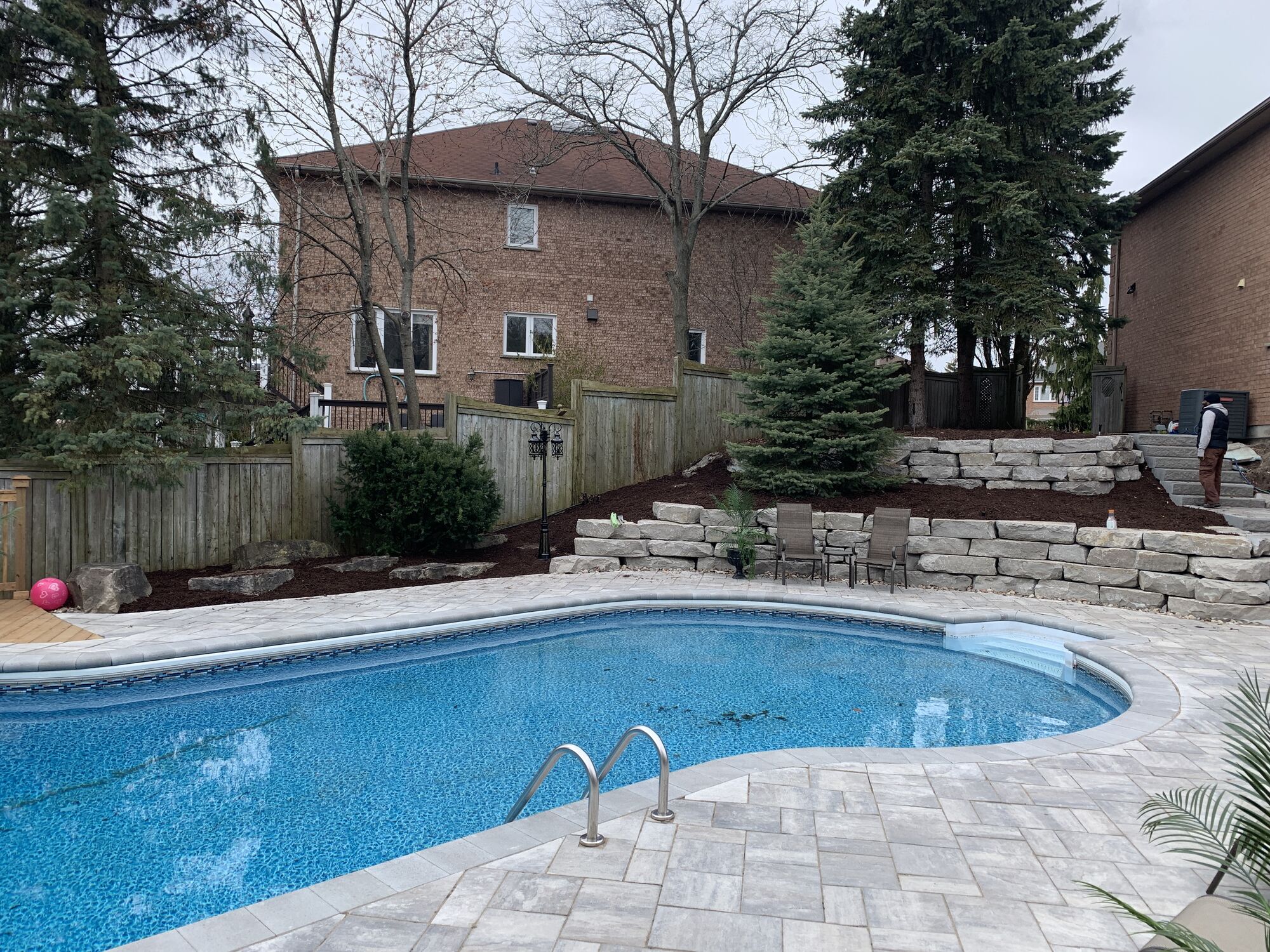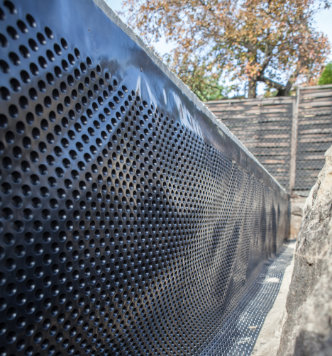
Proper grading around the house means the ground slopes away from your foundation so rain and snowmelt drain away instead of soaking the soil against your basement walls. Guidance from the Institute for Catastrophic Loss Reduction (ICLR) for southern Ontario calls for a slope of at least 5% for the first 1.5 m from the house, measured after the soil settles, and at least 1.5% across the rest of the lot. On the ground, 5% over 1.5 m works out to a drop of about 7.5 cm.
Below is how to check your own grade, the signs of a grading problem, what soil to use, and the local rules to know before you move any earth.
How Much Slope Grading Needs
The figures below come from ICLR's basement flood protection guidance for new homes in southern Ontario. They are a sound target for correcting an existing yard too.
| Area | Minimum slope away from the house | What that looks like |
|---|---|---|
| First 1.5 m from the foundation | 5%, after settling | About 7.5 cm of drop over 1.5 m |
| The rest of the lot | 1.5% | About 1.5 cm of drop per metre |
| A patio against the foundation | 1% | About 1 cm of drop per metre |
ICLR also says the first grade should be built steeper than 5% on purpose, because fresh backfill settles and the final grade has to stay at 5% or more. University of Illinois Extension gives a similar target for older homes: a finished grade of at least 4% away from the foundation walls.
The Intact Centre on Climate Adaptation puts the goal simply: grade so water is directed at least 2 m away from the foundation.
A quick check you can do yourself
Push a stake into the ground against the foundation and another 1.5 m straight out. Run a string between them with a line level and pull it level. Measure from the string down to the soil at the outer stake. If the drop is less than about 7.5 cm, or the ground rises as it moves away from the house, that section needs regrading. Repeat on every side of the house, including beside the driveway and under decks.
Signs Your Yard Has a Grading Problem
Grading problems usually show up after heavy rain or a spring thaw. Walk the property during or just after a storm and look for these signs:
- Water pooling against the foundation or sitting in garden beds beside the house.
- Ground that slopes toward the house, or a dip where soil beside the foundation has sunk. Illinois Extension notes that settling around foundation walls is common and often comes from backfill that was not compacted in layers when the house was built.
- Damp patches or leaks on basement walls that appear after storms.
- Window wells that fill with water. ICLR advises grading so water is directed away from window wells, stairwells and decks.
- A patio or walkway that tilts toward the house, sending runoff to the wall.
- Downspouts that empty right beside the foundation.
- Soil, mulch or plants piled up against siding.
- Water lying along a fence line. The City of Oshawa notes that lots are designed to drain along property lines, and a fence built along the line can block that drainage.
One sign on its own is worth watching. Several together usually mean the grade around the house needs correcting.
What Soil to Use for Grading
The soil against the foundation should shed water, not hold it like a sponge, and it has to stay put once it is compacted.
University of Illinois Extension recommends raking back mulch, stone and ground cover first, because they do not compact well, then adding soil in layers, or lifts, that are typically heavier in clay content, and to ask a geotechnical engineer about your soil type. Compact each lift before adding the next, and avoid piling soil against siding. The Milwaukee Metropolitan Sewerage District gives similar advice: bagged topsoil, usually a compost mix high in organic content, is a poor choice, while a screened, locally sourced silty clay loam settles well and still supports grass. It also says to keep at least 10 cm (4 inches) of the concrete foundation showing above the soil.
Once the grade is right, a layer of topsoil and new sod protects the surface from erosion. Our sod installation work includes fine grading to remove low spots and direct water away before the turf goes down.
Downspouts and Window Wells Matter Too
Grading only works if roof water is not dumped back onto it. The Intact Centre recommends extending downspouts and sump pump discharge pipes at least 2 m from the foundation. ICLR says they should discharge beyond the backfill zone, onto a swale or other drainage feature.
For window wells, the Intact Centre suggests wells that sit 10 to 15 cm above the ground, so surface water cannot spill in. If you raise the grade near a window, check the well height at the same time.
Durham Region Rules Before You Regrade
Moving soil near a property line or changing how a lot drains can need municipal approval, and the rules differ between towns.
Oshawa
All land in Oshawa is covered by the City's Site Alteration By-law. A permit is required to change the elevation of land within 0.6 m of a property line, to alter any swale, ditch or channel used for drainage, to change the existing drainage pattern, or to bring in or remove more than 20 cubic metres of material. Lawn dressing, landscaping and adding soil to garden beds are exempt when they stay within those limits. The City reviews landscaping proposals at no cost and will advise whether a permit is needed. It also notes that property owners are responsible for maintaining the drainage on their own lot.
Ajax
Ajax's Property Standards By-law requires yards to be maintained so water does not enter the basement. Low-lying or excavated areas that collect water must be drained, filled and graded so water flows to a storm sewer or ditch.
Other Durham municipalities have their own site alteration rules. Rules change, so confirm with your municipality before regrading, and never redirect water onto a neighbour's property.
When to Call a Professional
A low spot in one garden bed can be fixed with a few wheelbarrows of soil and a tamper. Call a professional when water is already getting into the basement, when the grade has to change near a property line, or when the fix involves drainage pipes, swales or a French drain.
Grade correction is part of our exterior waterproofing service. After excavating and waterproofing the foundation, we backfill and slope the final grade away from the wall. French drain installation is part of our drainage work as well, and we confirm the right fix during the on-site quote. For yards that stay wet away from the house, our guide to water drainage solutions in Ontario compares the options. If you are redesigning the whole space, our backyard landscaping ideas guide covers planning grade and drainage alongside patios and planting.
Common Questions
How much should the ground slope away from my house?
ICLR's guidance for southern Ontario is at least 5% for the first 1.5 m, measured after settling, which is a drop of about 7.5 cm. Beyond that, the rest of the lot should slope away at 1.5% or more.
What are the signs of a grading problem?
Water pooling against the foundation, soil that has sunk beside the walls, ground that slopes toward the house, damp basement walls after storms, and window wells that fill with water are the most common signs.
What kind of soil should I use to regrade around my house?
Use a compactable soil with some clay in it, added in thin layers and tamped, rather than bagged topsoil or mulch. Finish with topsoil and sod, and keep at least 10 cm of foundation showing.
Do I need a permit to regrade my yard in Durham Region?
Sometimes. In Oshawa, changing the grade within 0.6 m of a property line, altering a drainage swale, or moving more than 20 cubic metres of soil needs a Site Alteration Permit. Check your own municipality's rules before you start.
How far should downspouts drain from the foundation?
At least 2 m, according to the Intact Centre on Climate Adaptation, and beyond the backfilled soil around the house.
Get Your Grading Checked
If water is collecting against your foundation, contact us for a free on-site quote anywhere in Durham Region. We will check the grade around the house and recommend the fix, from regrading and sod to exterior waterproofing.
Sources: ICLR, Basement flood protection: New construction (southern Ontario, February 2024, hosted by the Town of Caledon); Intact Centre on Climate Adaptation, Three Steps to Cost-Effective Home Flood Protection; University of Illinois Extension, Landscape Drainage for Homeowners; Milwaukee Metropolitan Sewerage District, Proper Grading Around Your Home; City of Oshawa, Landscaping and Grading; Town of Ajax, Property Standards By-law 46-2017.