Good backyard landscaping ideas for a Durham Region home have two things in common: they hold up through our freeze-thaw winters, and they fit how your household actually uses the yard. This guide walks through ideas taken from backyards Michael Durham Landscaping has built across the region, what each one involves, and the rules Oshawa, Whitby, Ajax and Pickering set for patios, sheds, pools and fences. Every photo is from our own work, captioned with the project name from our records.
Start With How You Use the Yard
Before choosing materials, answer a few practical questions:
- Who uses the yard, and for what? Hosting dinners, kids playing, a dog that needs a run, or a quiet place to sit each call for a different layout.
- Is a pool, hot tub or shed in the plan, now or later? Each one brings its own municipal rules, and planning for it now avoids tearing out new work later.
- How much upkeep do you want? A lawn needs regular cutting; stone, gravel and well-mulched beds need far less.
- Where does water go today? Watch the yard during a heavy rain. Pooling against the house or along a fence line should be fixed in the plan, not after it.
We answer these together during the free on-site consultation. There is no separate design fee; the layout, materials and plantings are built into the quote for residential landscaping.
An Interlock Patio That Stays Flat
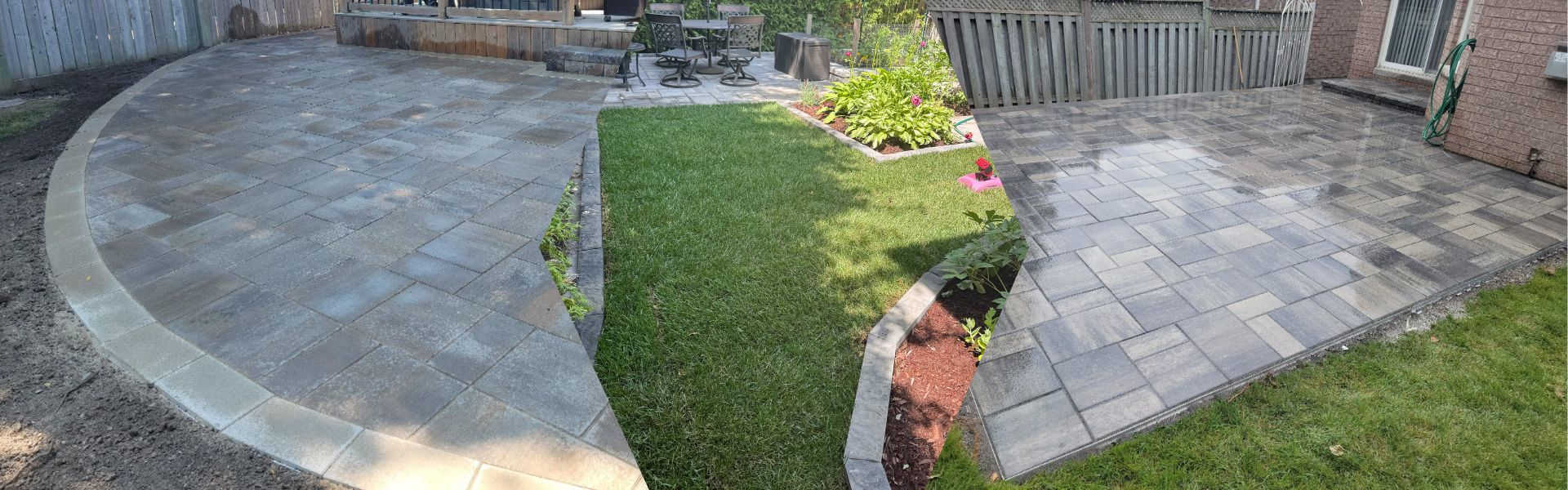
A patio is where most backyard plans start, because it gives you a level, dry place for a table and chairs. The project above pairs an interlock patio with a strip of sod, which softens the edge of the stone and leaves room for planting later.
What keeps a patio flat in Durham Region is the part you never see. Every interlocking and hardscaping project we build starts with six inches of engineered aggregate, compacted in three lifts, with drainage plotted before the first stone is set. Edge restraint holds the outer pavers in place, and polymeric sand locks the joints and resists weeds and ants. Most residential patios take 3 to 5 days from excavation to the final polymeric sand; projects with retaining walls can take a week or more.
Choosing between pavers, natural stone and poured concrete? Our guide to patio materials for cold climates compares them, and interlocking ideas for patios and walkways shows layout options. If you already have a patio that has sunk or lost its joint sand, we also repair and seal existing interlock.
A Fire Pit Area Framed by Garden Beds
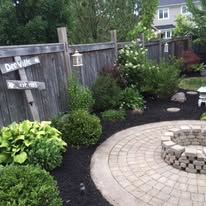
A fire pit turns a patio corner into a place people gather on cool spring and fall evenings. Surrounding it with a planted bed, as in the project above, keeps the area from looking like an afterthought and gives the seating a defined edge.
Our garden beds are shaped with steel edging and filled with triple-mix soil, with plantings chosen for Durham Region's zone 5b/6a climate. Hostas, daylilies, hydrangeas, ornamental grasses and boxwood are popular choices that thrive here. Keep tall grasses and shrubs a sensible distance back from the fire itself, and before the first fire, check your town's rules on backyard fires with its fire service.
A New Lawn, Laid as Sod
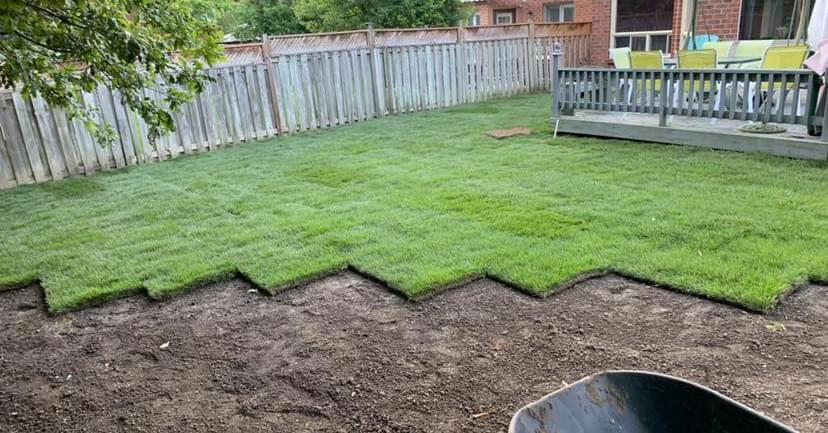
If the existing lawn is thin, patchy or full of weeds, new sod gives you a finished lawn in a day. Our sod installation process removes the old lawn to bare soil, tills triple mix or compost into the existing soil, fine-grades the surface so water does not pool, and lays fresh Kentucky Bluegrass sod, rolled tight and watered on completion. We never lay sod over existing grass, because it traps moisture and keeps the new roots from reaching the soil.
With proper watering, sod starts rooting within 10 to 14 days and is fully established in about 4 to 6 weeks. We install from May to October; early fall is an excellent time because cooler weather means less watering. Our post on the best time to install sod goes into the timing in more detail.
Oshawa note: the City's Site Alteration By-law exempts fill used for lawn dressing, landscaping, flower beds and vegetable gardens on residential land, provided the grade within 0.6 m of the property line does not change, no drainage swale or ditch is altered or blocked, and no more than 20 cubic metres of fill is brought in.
A Pool Surround Finished With the Pool
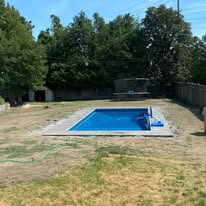
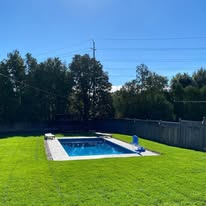
A pool is the biggest change most families make to a backyard, and the area around it decides how the whole yard feels. The before and after photos above show a pool surround finished with fresh sod. When we handle pool installation, the same crew builds the interlock or concrete pool deck, installs enclosure fencing that meets your municipality's by-law, regrades the yard and lays the sod, so the backyard is complete when the pool is.
Pool enclosure rules are set by each municipality, and a permit comes before the work:
| Town | When a permit is needed | Minimum enclosure height |
|---|---|---|
| Oshawa | Pools, hot tubs and decorative ponds deeper than 60 cm need a Pool Enclosure Permit | 1.5 m (and no higher than 2.2 m) |
| Whitby | Pools deeper than 0.6 m; the permit is needed before the fence is installed | 1.2 m, set back at least 1.0 m from the pool edge |
| Ajax | A swimming pool enclosure permit is needed before excavating for or erecting a pool | 1.5 m |
| Pickering | A pool enclosure permit is required under By-law 6943/09 | 1.2 m |
Two more local details are worth knowing. In Oshawa, an inground pool also needs a Site Alteration Permit, and the land within 0.6 m of the property line must stay undisturbed. If your Oshawa home was built in the last two years, the City asks you to get approval from your builder first, because the lot grading may not yet be certified. In Whitby, homes in a subdivision the Town has not yet assumed need a letter of permission from the developer before a pool goes in. See our town pages for pool installation in Oshawa, Whitby, Ajax and Pickering.
Clean Garden Beds With Mulch and Edging
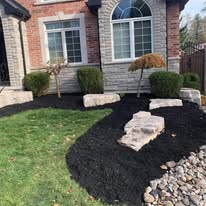
Not every good idea needs construction. Re-cutting bed edges, clearing weeds and topping up mulch can make an established yard look new in a single visit, as the garden bed refresh above shows. Mulch holds moisture, keeps soil temperatures steady and slows weeds; our post on what mulch does and how to use it covers the details. To keep beds looking this way all season, our garden maintenance visits handle pruning, weeding, mulch top-ups and hedge trimming weekly, bi-weekly or monthly.
A Gravel Pad for a Shed, Trailer or Seating Area
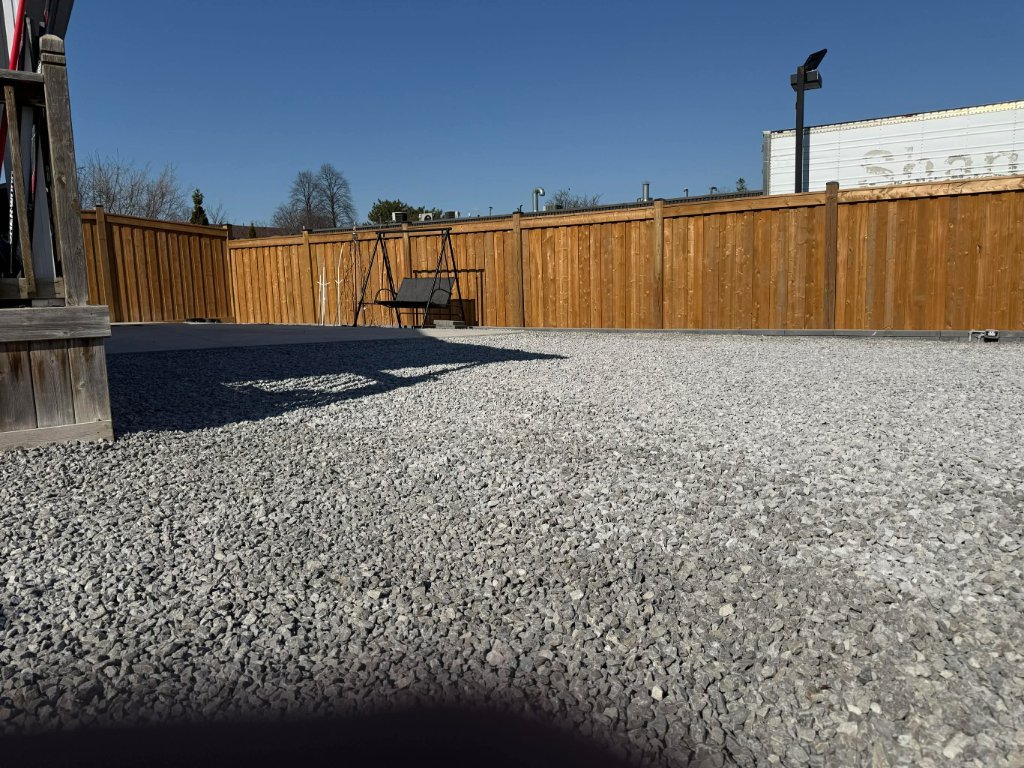
A compacted gravel pad is a practical base for a shed, a trailer, garbage bins or a casual seating area, and it drains better than a patch of worn lawn. For aggregate installation we grade the area for drainage, lay geotextile fabric so the stone does not sink into the soil, then spread the stone in lifts and plate-compact it. Most pads use 3/4-inch clear crush or crusher run, depending on what will sit on them.
If a shed is going on the pad, check the permit rules first:
- Oshawa: a storage shed does not need a building permit if it is no more than 15 m² (161 sq. ft.), one storey, not attached to another structure and has no plumbing. Accessory buildings must sit at least 0.6 m from interior side and rear lot lines, and a shed or garage on a concrete foundation needs a site alteration permit.
- Whitby: a shed accessory to a house needs a building permit if it is larger than 15 m² or more than one storey; other accessory structures need one above 10 m². Accessory structures are allowed only in side and back yards, at least 0.6 m from interior and rear lot lines.
- Pickering: garden storage sheds under 15 m² (161 sq. ft.) without plumbing typically do not need a permit, but an accessory structure attached to a building or with plumbing needs one at any size.
- Ajax: the Town publishes a permit guide for carports, garages and sheds; check it before you build.
In Oshawa, Whitby and Pickering, a shed that does not need a permit still has to meet the zoning by-law.
Low-Maintenance Stone and River Rock
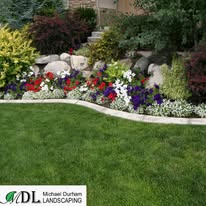
Decorative stone and river rock suit the parts of a yard where grass struggles: narrow side yards, strips along a fence or the ground under a downspout. Mixed with a few hardy perennials, as in the project above, stone keeps colour in the yard without weekly cutting. For more ways to cut down on upkeep, read our low-maintenance landscaping tips.
A Privacy Fence Around the Yard
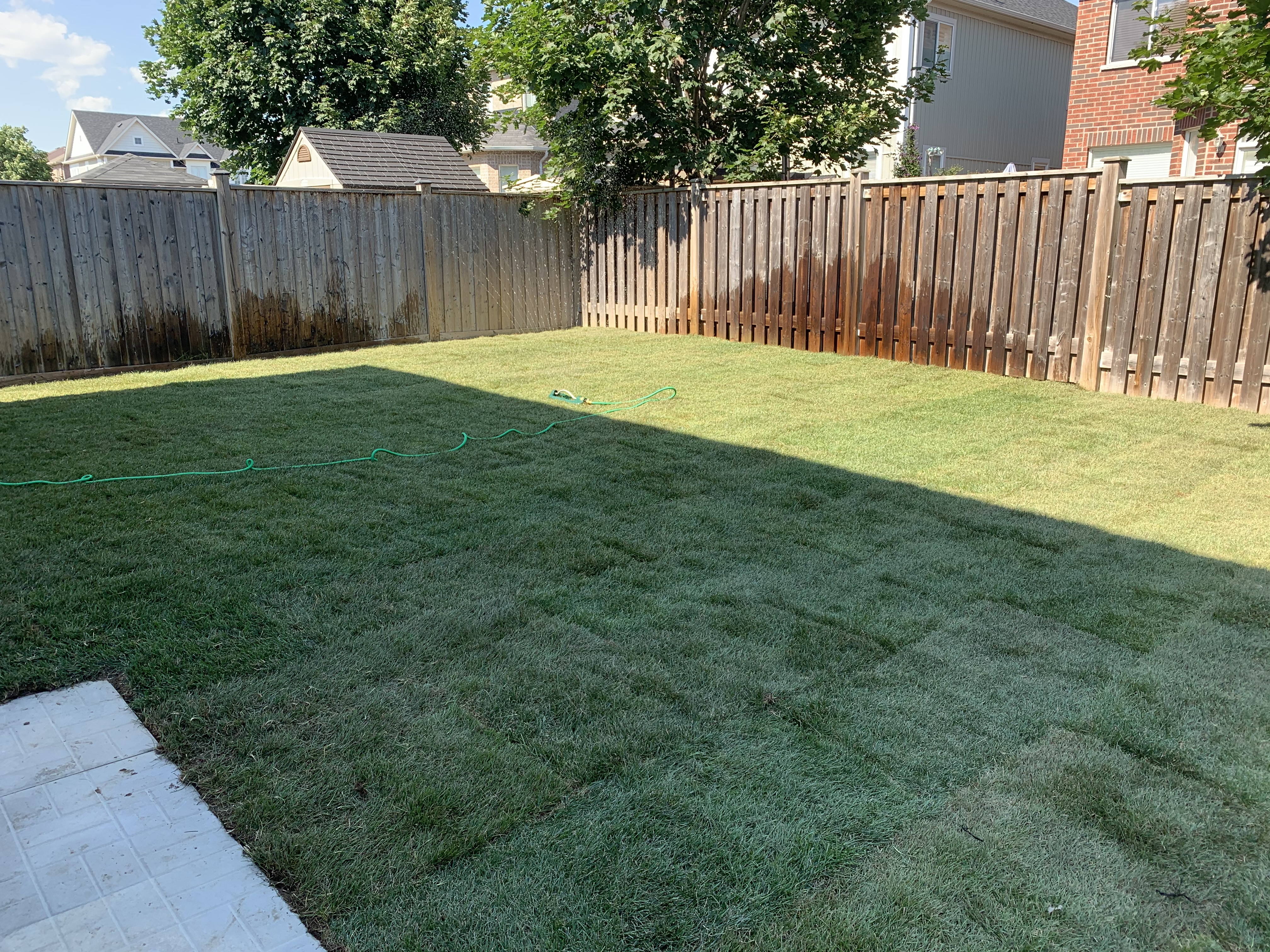
A fence gives a backyard privacy and keeps kids and pets in. For fence installation we review your property survey, get a utility locate, and set posts 4 feet deep in concrete, below the frost line, so they do not heave or lean.
Fence rules vary by town. Ajax and Pickering both cap fences in side and rear yards at 2 metres; Ajax limits front yard fences to 1 metre, and Pickering allows 1.0 m for a solid fence and 1.5 m for an open one. Whitby does not require a permit for a fence but strongly encourages a current survey so the fence stays on private property, and its Division Fence By-law requires written notice to your neighbour by registered mail at least 14 days before building a shared fence. Oshawa points out that lots are designed to drain along the property line, so a fence that blocks that drainage can leave water ponding along it.
Lighting for Evenings Outside
Low-voltage LED landscape lighting extends the hours you can use a backyard and makes steps and paths safer after dark. We run the wiring through buried conduit and use brass or cast-aluminium fixtures rated for freeze-thaw, with timer, photocell or smart home control. If you are planting new garden beds, install the lighting at the same time so the wiring is buried before the mulch goes down.
Rules to Check Before You Build
Rules change, so confirm the details for your address with your municipality before work starts. These apply to almost every backyard project:
- Get utility locates before any digging. Ontario One Call now operates as Ontario Dig Authority. Locates are required for any project that breaks ground, no matter how small or shallow; request them at least 5 business days before you dig. The service is free.
- Decks. Oshawa does not require a permit for a house deck with no roof that is 600 mm (24 in.) or less above the ground. Whitby requires a permit for decks over 0.6 m (2 ft.) high, and Pickering for decks more than 60 cm (24 in.) above ground. Ajax publishes its own guide for decks and porches.
- Grading and drainage. In Oshawa, changing the grade within 0.6 m of a property line, changing a drainage swale, building a new retaining wall or bringing in more than 20 cubic metres of fill needs a site alteration permit. The City will review a patio or other landscaping plan that changes grades for free and tell you whether a permit is needed. Our post on grading around your house explains why slope matters.
- Retaining walls. In Pickering, a retaining wall more than 1 metre high needs a building permit when it is on or next to public property, at a building entrance or on private property the public can reach. See our retaining wall page for how we build them.
- Conservation areas. Properties in areas regulated by the Central Lake Ontario Conservation Authority may need its approval as well, and Pickering lists the Toronto and Region Conservation Authority among the agencies that may need to approve a project.
Planning the Order of Work
Big backyard plans often happen in stages over a few seasons. If yours will, build in this order so later work does not damage earlier work:
- Locates, survey review and permits.
- Grading and drainage, so water moves away from the house before anything is built on top.
- Hardscape: patio, walkways, retaining walls and any gravel pads. These need machine access, so they go in before the lawn.
- Lighting conduit and fence posts.
- Garden beds and planting.
- Sod last, once heavy equipment is finished in the yard.
Common Questions
Do I need a permit for a backyard patio in Durham Region?
A standard ground-level patio does not usually need a building permit. In Oshawa, the City encourages homeowners to submit patio plans that change grades or drainage for a free site alteration review. Retaining walls and decks can need permits depending on their height.
How long does it take to install a backyard patio?
Most residential interlock patios take 3 to 5 days from excavation to the final polymeric sand. Larger projects with retaining walls can take a week or more.
When is the best time to lay sod in Durham Region?
We install sod from May to October. Early fall is an excellent time because cooler temperatures reduce how much watering new sod needs.
Do I need a fence around a hot tub?
In Whitby, a hot tub does not need a fence if it has a secure, rigid cover that is kept locked when not in use. Rules differ by town, so check with your municipality. In Oshawa, for example, hot tubs and decorative ponds are covered by the same enclosure rules as pools.
Do you charge for landscape design?
No. Every project includes an on-site consultation covering layout, materials, plantings and budget, and there is no separate design fee; it is built into the quote.
Get Ideas for Your Own Backyard
Every yard has its own slope, soil and sun, so the best plan starts with a visit. Request a free quote and we will walk the property with you, or browse more of our work on the projects page. We work across the region, including Oshawa, Whitby, Ajax and Pickering.
Sources: City of Oshawa, Pools and Hot Tubs; City of Oshawa, Landscaping and Grading; City of Oshawa, Accessory Structures; City of Oshawa, When Do I Need a Building Permit; Town of Whitby, Swimming Pools; Town of Whitby, Decks and Fences; Town of Whitby, Accessory Structures; Town of Ajax, Fence By-law 42-2025; Town of Ajax, Building Permits and Inspections; City of Pickering, Pool Enclosure Permits; City of Pickering, Fences and Swimming Pool Enclosure By-law 6943/09; City of Pickering, Building Permits; Ontario Dig Authority.