French drain installation is the right answer for some wet yards, but not for all of them. Before anyone digs a trench, work out where the water is coming from: ground that slopes the wrong way, a downspout emptying in the wrong spot, a low patch with nowhere to drain, or heavy soil that holds water. Each cause has its own fix, and in Durham Region each fix has to respect local rules on where collected water may go. Below is how to diagnose the problem, how to match the fix, and the drainage rules Oshawa, Whitby, Ajax and Pickering publish. Rules change, so confirm the current version with your municipality before you start.
Start With Where the Water Comes From
Walk the lot during or just after a heavy rain or spring thaw, and note whether water stops next to the house, in the open lawn or along a fence line. The table below is a starting point, not a diagnosis; an on-site look confirms the cause.
| What you see | Possible cause | Fix to consider |
|---|---|---|
| Water pooling against the foundation or in beds beside the house | Ground sloping toward the house, or settled backfill | Regrading |
| A soggy strip or washout below one corner of the roof | A downspout emptying too close to the house or onto a path | Downspout extension, splash pad or redirection |
| A low patch in the lawn that stays wet for days | A dip with no way out, or a blocked swale | Fill and regrade, or a French drain to an outlet |
| Water lying along a fence or garden at the lot line | A side yard swale that has been blocked or filled | Reopen the swale; check the town's rules first |
| Damp basement walls after storms | Grading, downspouts, or a failed weeping tile system | Grade and downspout fixes first, then exterior waterproofing |
The Government of Canada's guidance on French drains, trench drains and weeping tiles lists the outdoor warning signs as pooling water after rain or snowmelt, persistently soggy spots that limit plant growth, soil erosion and foundation cracks. The Region of Durham's basement flooding page adds poor lot drainage, overflowing eavestroughs, plugged downspouts and a failed weeping system to the list of causes. Soil type matters too: our post on water drainage solutions for Ontario yards explains why clay and compacted soil keep water at the surface.
Matching the Fix to the Cause
Regrading
If the ground falls toward the house, no drain fully makes up for it; the Government of Canada calls a correctly graded property the first line of defence. Slope targets, a string line check and soil choice are in our post on proper grading around the house. Regrading near a lot line or across a swale can need permission, as the town section below explains.
Downspout changes
The federal eavestroughs and downspouts guidance suggests using an extension to send roof water toward a well-drained part of the front or back yard, such as a planted area, and at least 2 m from the foundations of all nearby homes where possible. It recommends clearing them every spring and fall, and asks homeowners to check with their municipality whether downspouts must be disconnected from the sewer system, noting that some municipalities help pay for disconnection. Wherever the new outlet goes, it still has to meet your town's discharge rules.
French drain installation
A French drain is a gravel-filled trench with a buried perforated pipe that carries water away from a wet area. The Government of Canada describes the pipe as a weeping pipe, usually wrapped in filter fabric to keep debris out, and says the trench is typically 20 to 30 cm (8 to 12 in.) below ground, installed with a slope so water runs from a higher point to a lower one. French drains mainly handle surface water, are worth considering when you cannot get a good grade, and can be installed any time the ground is not frozen.
Plan the end of the pipe before the trench. A French drain releases everything it gathers at one spot, so the outlet has to be legal and harmless. Ontario's guidance on surface water and drainage disputes says anyone who collects surface water, through pipes, ditches or eavestroughs, must discharge it where it will not cause problems downhill, and damage from collected water can be grounds for legal action. In a subdivision, your lot grading plan shows where water was designed to go, and the town rules below say where it may not go.
When the water is reaching the foundation
If the basement is already wet, the fix may be at the wall. The Government of Canada says weeping tile sits 1.8 to 2.5 m (6 to 8 ft.) below ground at the footing, can clog with soil over time, and takes excavation, usually with heavy machinery, to replace. That is a job for a professional.
Where Drain Water Is Allowed to Go
Across the four towns, the rules point the same way: roof, sump and pool water should land on your own property, away from paths and neighbours, and flow along the lot's designed drainage route. Fines and fees are set in each municipality's by-laws and are not repeated here.
| Municipality | Downspouts | Sump pumps | Pool and hot tub water | Who to contact |
|---|---|---|---|---|
| Oshawa | Neighbour concerns go to Service Oshawa | Not stated on the pages reviewed | Neighbour concerns go to Service Oshawa | Service Oshawa; sitealteration@oshawa.ca for grading |
| Whitby | Not onto entranceways, walkways, stairs, sidewalks, impervious road allowances or directly onto a neighbour | Same rule | Same rule | Town of Whitby; drainage pattern line 905-430-4307 |
| Ajax | Not onto sidewalks or stairs; must discharge onto your own property | Not directly onto a neighbouring property | Not stated on the pages reviewed | Town of Ajax |
| Pickering | Must drain onto the property it comes from | Must drain onto your own property, not directly onto a neighbour | Not onto adjacent property, other than a municipal storm sewer | City of Pickering; City Development for homes under 5 years old |
Town by Town Drainage Rules
Oshawa
Oshawa's Landscaping and Grading page puts most yard regrading under the Site Alteration By-law, including changing elevations within 0.6 m of a property line, altering a swale, or changing the existing drainage pattern. Our Oshawa hardscaping page explains the permit categories and the City's free review, so here we focus on drainage questions.
For a leaking basement, or backyard ponding that is not caused by recent landscaping work, the City tells residents to call a private contractor. For concerns about a neighbour's downspout locations or pool water discharge, and for water ponding on the road, sidewalk or boulevard, residents should contact Service Oshawa.
The City's Flooding page notes that localized flooding, caused by blocked surface flow paths, is more common in older areas where grading was changed before the 2006 Site Alteration By-law. For seepage through basement walls, it suggests having a professional assess the weeping system at the footing; a backup through a floor drain goes to the Region of Durham Works Department depot. A street grate clogged with leaves, snow or ice can be cleared or reported to Service Oshawa.
Whitby
Whitby's Drainage and Grading page explains how roof water is handled in the town: front downspouts are typically connected to the storm sewer, while rear downspouts drain to splash pads. Townhouses are the exception, since all downspouts in new townhouse developments are usually connected, and their split drainage sends rear yard water through swales to rear yard catch basins. A downspout that is not connected should run into an extension pipe or splash pad so water keeps moving away from the house.
The Town's Property Standards By-law, sections 4.22 and 4.23, covers far more than downspouts. Drainage from roofs, rainwater pipes, sump pumps, water softeners, air conditioners, swimming pools, pool pumps, hot tubs, wading pools and ornamental ponds must not be discharged onto an entranceway, walkway, stair, sidewalk or impervious road allowance, or directly onto a neighbouring property.
Before filling low spots with soil, the Town suggests checking with a professional landscaper or engineer so you do not block your own or a neighbour's drainage. If a neighbour's grading change is flooding your yard, Whitby asks you to talk with them first, then file a by-law complaint with detailed photos if that fails. Rules on the 60 cm strip along property lines are on our Whitby hardscaping page.
Ajax
Ajax sets its yard drainage rules in Property Standards By-law 46-2017. Section 4.33 says rainwater downspouts and eavestroughs must not discharge directly onto sidewalks or stairs and must discharge onto the owner's property. Section 4.44 says no sump pump may discharge directly onto a neighbouring property. If your property has a catch basin, section 4.32 makes you responsible for keeping its grate clear of debris that stops water from getting in.
The Town's lot grading design criteria show how a subdivision lot is meant to drain. Rear yard catch basins are placed entirely on one lot, with the centre about 1.0 m from property lines, and driveways may not be used as outlets for swales. Front yards are graded toward the street. The patio side of those criteria is on our Ajax hardscaping page.
Pickering
Pickering's Drainage and Grading page says Property Standards By-law 7887/21 requires all downspouts and sump pumps to drain onto the property they come from, although water may flow onto a neighbour's land where that follows naturally from the lay of the land. The City advises homes with sump pumps to consider disconnecting their downspouts from the weeping tile, and to run disconnected downspouts into an extension pipe or splash pad. Owners of homes less than 5 years old with grading concerns can contact City Development.
The City's Nuisance By-law adds that water from swimming pools, hot tubs, wading pools and ornamental ponds must not drain onto adjacent property, other than a municipal storm sewer.
Pickering's Frequently Asked Questions say residents are not permitted to change the grading and drainage patterns on their property, and that a catch basin on your lot must not be removed or covered. Our Pickering hardscaping page covers what that means for patios and the final lot grading certificate. For a wet Pickering yard, the fix has to restore the designed pattern, not create a new one.
Getting Your Lot Grading Plan
A lot grading plan shows which way your yard was designed to drain, where the swales run and whether there is a rear yard catch basin, which makes it the most useful document for planning a fix.
- Whitby: the developer provides a site plan showing lot grading for subdivisions approved after 2016; for older subdivisions, the Town supplies a copy on request from the registered owner.
- Ajax: the Town's design criteria require lot grading plans for new developments to show the runoff direction from rear yards, every swale other than normal side yard swales, and every rear yard catch basin with its grate and outlet elevations.
- Pickering: the City says a final lot grading certificate is issued by the consulting engineer once a lot is graded, sodded and inspected, and that your builder can tell you whether yours has been issued.
Help From the Region of Durham
The Region of Durham runs the sanitary sewers, and storm sewers on local roads belong to the local municipality, according to the Region's basement flooding page. It lists missing downspout disconnection and poor lot grading among the contributors to basement flooding. Where flooding comes from a leaking foundation or drainage on your property, the Region says repairs are the owner's responsibility.
For homes that have flooded because of a sanitary sewer backup, the Region publishes a Basement Flooding Loan Program notice. It covers an approved backwater valve and a sump pump installed by a licensed plumber, with a permit and a final plumbing inspection from your local municipality. That is work for a licensed plumber, so check the Region's current terms with the Region directly.
How We Approach Drainage Work
Exterior waterproofing is where our drainage work lives. French drain installation is part of that work, alongside grading correction, and we confirm the right fix for your yard during the on-site quote.
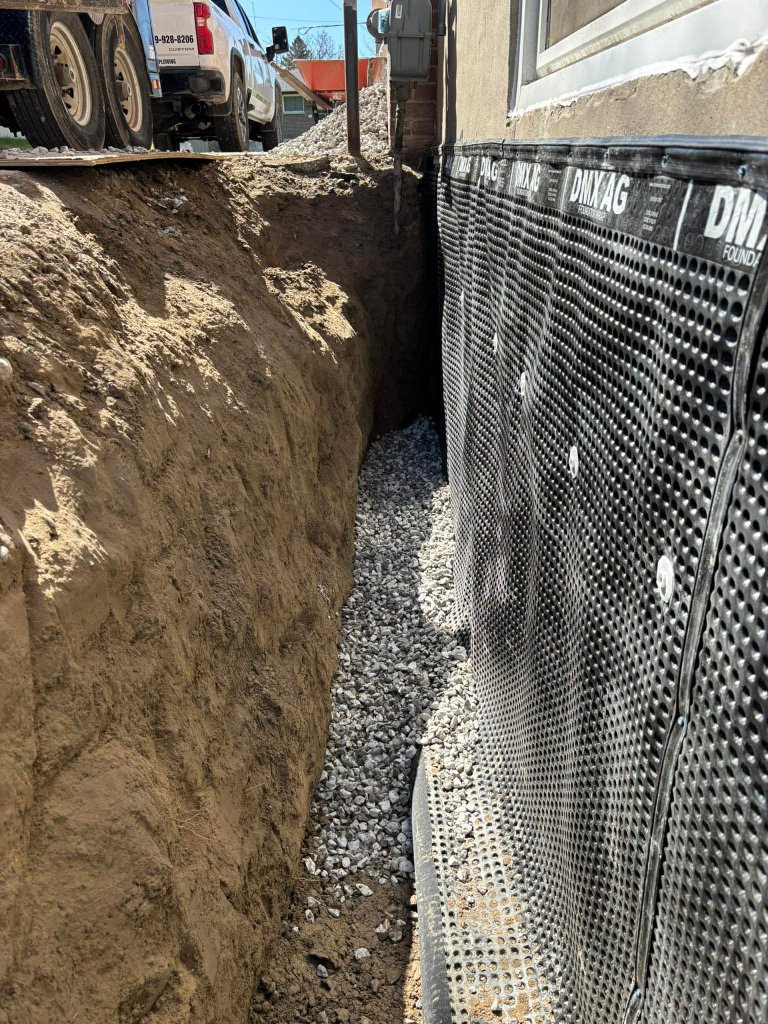
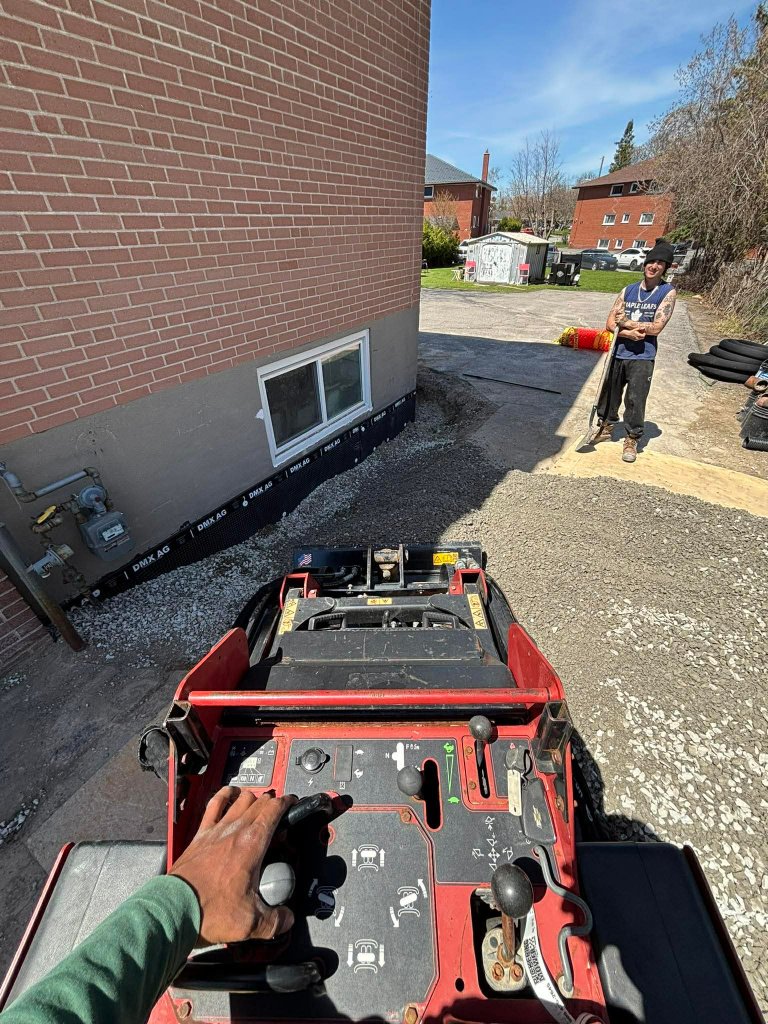
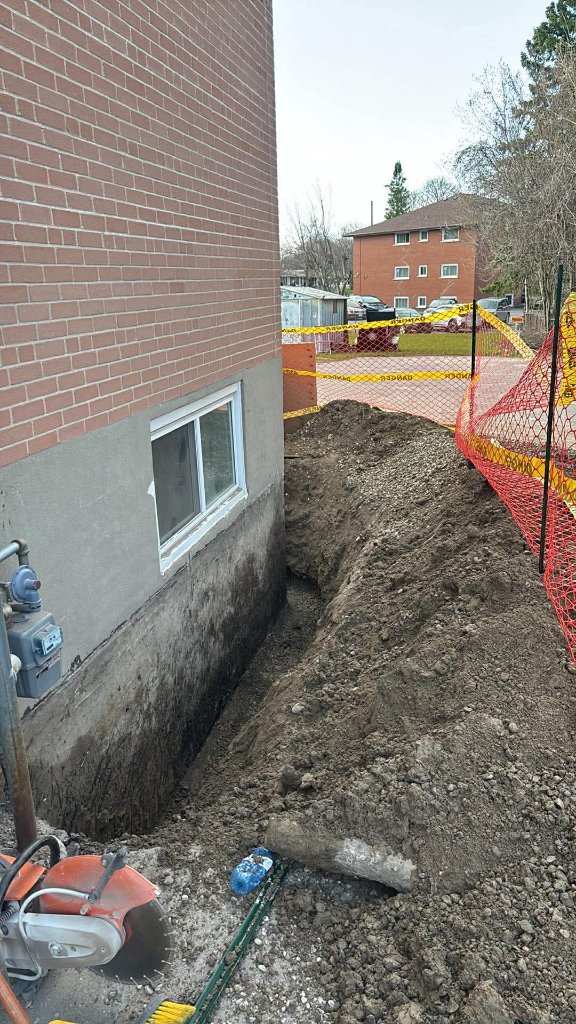
When water is reaching the foundation, our exterior waterproofing starts with full excavation along the wall down to the footing. We apply a waterproof membrane to the full wall with drainage board to direct water downward, replace the weeping tile with new perforated pipe wrapped in filter fabric and bedded in clear gravel, then backfill and slope the final grade away from the foundation. A typical residential job takes 3 to 5 days, and weather can extend it. We backfill and re-grade afterward and can coordinate sod installation or garden restoration as part of the same project.
Common Questions
Do I need a French drain or just better grading?
Start with grading and downspouts. The Government of Canada treats a correctly graded property as the first line of defence and suggests French drains when a good grade cannot be achieved. If the ground already slopes away and a low area still stays wet, a drain to a proper outlet is the next step.
Can my French drain or sump pump empty onto my neighbour's yard?
No, not directly. Whitby, Ajax and Pickering all bar sump pump discharge directly onto a neighbouring property, and Ontario's guidance says anyone who collects surface water must release it where it will not harm properties downhill. Send it along your lot's designed drainage route instead.
Where should my downspouts drain in Durham Region?
Onto your own property, away from the foundation, paths and neighbours. Whitby and Ajax bar discharge onto sidewalks and stairs, Pickering requires downspouts to drain onto the property they come from, and federal guidance suggests extending them at least 2 m from nearby foundations where possible.
Who do I call about a neighbour's drainage or a flooded basement?
For a neighbour's downspouts or pool water, contact your municipality; in Oshawa that is Service Oshawa. For a sewer backup through a floor drain, contact the Region of Durham Works Department depot. For water coming through the walls or pooling in your own yard, Oshawa's advice is to call a private contractor.
Plan Your Drainage Fix
Contact us for a free on-site quote, and we will look at where your water comes from and goes before recommending regrading, a French drain or exterior waterproofing. For the rest of your property, see our landscaping pages for Oshawa, Whitby, Ajax and Pickering.
Sources: Government of Canada, French drains, trench drains and weeping tiles; Government of Canada, Eavestroughs and downspouts; Government of Ontario, Surface water and drainage disputes; Region of Durham, Basement Flooding; Region of Durham, Basement Flooding Loan Program notice; City of Oshawa, Landscaping and Grading; City of Oshawa, Flooding; Town of Whitby, Drainage and Grading; Town of Whitby, Property Standards By-law; Town of Ajax, Property Standards By-law 46-2017; Town of Ajax, Design Criteria Section E, Lot Grading; City of Pickering, Drainage and Grading; City of Pickering, Nuisance By-law; City of Pickering, Frequently Asked Questions.