Why does salt melt ice? Salt dissolves into the thin film of water on top of the ice and lowers that water's freezing point, so the ice keeps melting at temperatures where plain water would freeze solid. The colder the pavement gets, the less ice each handful of salt can melt and the slower it works. Rock salt is effective down to about minus 9°C and does very little below that, which is why the coldest mornings in Durham Region call for a different product or for traction sand.
How Salt Melts Ice: Freezing Point Depression
Pure water freezes at 0°C. Right around that temperature, a sheet of ice on your driveway usually has a very thin layer of water on its surface, and the two are always trading places: some ice melts into the water while some water freezes back onto the ice.
When salt dissolves in that water, it splits into ions. Rock salt (sodium chloride) breaks into sodium and chloride ions, and those ions get in the way of water molecules trying to lock into the rigid structure of ice. The water can still melt the ice, but it can no longer freeze back at 0°C. Chemists call this freezing point depression. The result is brine: salty water with a lower freezing point than plain water, which keeps working its way down to the pavement and breaks the bond between the ice and the surface.
Why salt needs a little water first
Salt does nothing as a dry crystal. It has to dissolve before it can lower anything, and dissolving needs moisture. The City of Pickering explains that its trucks salt first and plow later because salt reacts with the moisture in the snow to make brine, which breaks the bond between the snow and the road so the slush plows off cleanly. On a dry, very cold surface, salt crystals can sit for a long time, or blow away, before they melt anything.
Why Rock Salt Stops Working in Deep Cold
Two things go wrong as the temperature drops. Each kilogram of salt melts less ice, and it takes longer to do it. The Minnesota Pollution Control Agency publishes how much ice one pound of dry rock salt melts at different pavement temperatures:
| Pavement temperature | Ice melted by one pound of dry salt | Melt time |
|---|---|---|
| About -1°C (30°F) | 46.3 pounds | 5 minutes |
| About -4°C (25°F) | 14.4 pounds | 10 minutes |
| About -7°C (20°F) | 8.6 pounds | 20 minutes |
| About -9°C (15°F) | 6.3 pounds | 1 hour |
| About -12°C (10°F) | 4.9 pounds | Dry salt is ineffective and may blow away first |
Salt that clears a walkway in five minutes just below freezing needs an hour to do much less work at minus 9°C. That is why throwing more salt at a cold, icy driveway rarely helps. The City of Pickering gives a similar working range: salt is most effective when the road temperature is between 0 and minus 10 degrees.
Practical temperature versus eutectic temperature
Some bags list a very low number, such as minus 21°C for rock salt. That is the eutectic temperature, the lowest point a deicer can melt ice under ideal, laboratory-type conditions. The University of Minnesota's winter salt guide notes that this is not what happens on a real driveway. The number that matters is the lowest practical melting temperature, which for rock salt is about minus 9°C (15°F).
The guide also points out that the pavement temperature counts, not the air temperature, so the forecast high is only a rough guide to how your driveway will respond.
Brine Versus Granular Salt
Because salt has to become brine before it works, there are two ways to apply it.
- Granular (dry) salt is spread as crystals. It has to find moisture, dissolve and form brine on the surface. It works well near freezing and poorly on cold, dry pavement, where it can blow away before it melts anything.
- Brine is salt already dissolved in water. The Minnesota Pollution Control Agency lists 23% as the optimal concentration for a sodium chloride brine. Because it is already dissolved, it does not have to wait for moisture, which makes it suited to anti-icing: treating pavement before a storm so ice cannot bond in the first place.
- Pre-wetted salt is granular salt moistened with a liquid as it is spread, so it starts dissolving sooner.
Environment and Climate Change Canada lists anti-icing, pre-wetting and electronic spreader controls among the best practices that lead to less salt use while improving road safety. Pickering says it meters its salt distribution and pre-wets to reduce environmental effects. For a broader look at anti-icing and de-icing, see our snow removal tips for Durham Region.
Salt Versus Calcium Chloride
Calcium chloride is also a salt, but it behaves differently in three ways that matter in an Ontario winter.
- More ions. Sodium chloride splits into two ions. Calcium chloride splits into three, one calcium and two chloride, so more particles interfere with ice forming.
- It pulls in its own moisture. Calcium and magnesium chloride absorb moisture from the air, which jumpstarts the melting process instead of waiting for brine to form.
- It works much colder. Its lowest practical melting temperature is about minus 29°C (minus 20°F), compared with about minus 9°C for rock salt.
| Rock salt (sodium chloride) | Calcium chloride | |
|---|---|---|
| Ions when dissolved | 2 | 3 |
| Lowest practical melting temperature | About -9°C (15°F) | About -29°C (-20°F) |
| Eutectic temperature | About -21°C (-6°F) | About -51°C (-60°F) |
| Forms | Rock salt, brine | Flakes, pellets or liquid |
| Cost | Inexpensive | Higher |
| Concrete | Amplifies freeze-thaw damage | Amplifies freeze-thaw damage and can react chemically with concrete |
Many bagged ice melts are blends with rock salt as the main ingredient, because it is the cheapest. Manufacturers do not have to list how much of each ingredient is in the bag, so check the label for the ingredients and the practical melting temperature.
What Salt Does to Concrete, Pavers, Lawns and Plants
Concrete
The U.S. Federal Highway Administration explains that deicing salts amplify freeze-thaw damage in concrete, partly because salt solutions keep the concrete more saturated. Calcium chloride and magnesium chloride add a second problem: they can react with the cement paste to form calcium oxychloride, an expansive compound that cracks concrete, and this can happen at temperatures between 0°C and 50°C. In the soak tests the FHWA describes, samples in calcium and magnesium chloride cracked while samples in sodium chloride showed no damage. So calcium chloride is the better melter in deep cold, but it is not gentler on concrete.
Interlock and pavers
The Concrete Masonry and Hardscapes Association says concrete pavers can have greater resistance to deicing salts than conventional paving materials, because of their high cement content, strength, density and low absorption. It also warns that mortared paver joints have a high risk of deterioration from freeze-thaw cycles and deicing salts. If you have interlocking stone or natural stone, check the manufacturer's guidance before choosing an ice melt. The University of Minnesota Extension notes that excessive salt can degrade concrete, asphalt and natural stone and corrode metal.
Lawns, gardens and trees
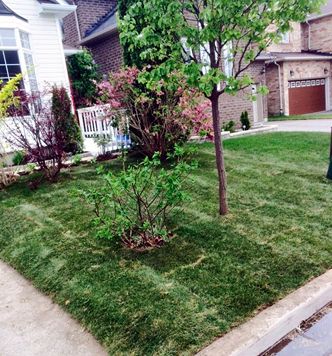
Salt is absorbed by roots and dehydrates plants, and salt spray burns turf and foliage, especially evergreens. Sodium also makes clay particles in soil swell, which increases compaction and slows water soaking in. Look for brown needles and leaves, lost buds and branches, and yellow or dead grass along the edges of driveways and walks. The University of Minnesota Extension suggests salt-tolerant fine fescue grasses along salted edges, and planting trees and shrubs at least 3 feet from driveways and walks where deicing salt is used.
Water
Environment and Climate Change Canada reports that about five million tonnes of road salts are used in Canada each year, and almost all of the chloride eventually reaches waterways through runoff or groundwater. Its five-year assessment found that road salts entering the environment in large amounts pose a risk to fish, lakes and streams, plants, animals and birds, and Pickering notes that road salt has been declared toxic to the environment under the Canadian Environmental Protection Act. The same federal page states that road salts are not harmful to human health. The Region of Durham's source water protection advice is simple: use less de-icing salt, and store salt somewhere dry and covered.
What This Means on a Durham Region Driveway or Lot
- Clear first, salt second. The University of Minnesota Extension says to remove snow before using deicers. Salt is for the thin layer left behind, not for snow.
- Use less than you think. The same guide suggests about a coffee mug of salt (about 12 ounces) for roughly 1,000 square feet, with about 3 inches between grains, and sweeping up leftover salt to reuse.
- Check the pavement temperature. Above about minus 9°C, rock salt works. Colder than that, use a product rated for the temperature, or sand for traction.
- Expect supply limits. Pickering has told residents it is managing a province-wide road salt shortage after several significant snow events, and may use blends of salt, sand or other materials to stretch supplies.
Here is how our contracts handle it. Our residential snow removal contracts cover plowing and shovelling only, so homeowners who want salt on the driveway or steps apply it themselves. On commercial and industrial snow removal contracts, salt or calcium chloride goes down after every plow visit, dispatch follows real-time weather monitoring with pre-treatment before major events, and every visit is logged with a timestamp, photos, conditions and salt application rates. For the municipal side of winter, including sidewalk clearing deadlines, see our guide to snow clearing rules in Durham Region.
Common Questions
Does salt melt ice at any temperature?
No. Salt keeps working below 0°C, but it slows down sharply as the pavement gets colder. Rock salt is practical down to about minus 9°C and does very little below about minus 12°C, where dry salt may blow away before it melts anything.
How does salt melt ice so fast near freezing?
Near 0°C the ice already has a film of water on it, so salt dissolves quickly into brine. The Minnesota Pollution Control Agency reports that one pound of salt melts 46.3 pounds of ice in about five minutes at minus 1°C, against 6.3 pounds in an hour at minus 9°C.
Is calcium chloride better than rock salt?
It works much colder, down to about minus 29°C, and it pulls in moisture from the air to start melting faster. It costs more, and the FHWA reports it can react chemically with concrete in a way sodium chloride did not in testing, so use it only where the cold calls for it.
Is road salt toxic?
Environment and Climate Change Canada states that road salts are not harmful to human health. The City of Pickering notes that road salt has been declared toxic to the environment under the Canadian Environmental Protection Act, and the federal assessment found that large releases pose a risk to fish, streams, plants and wildlife. That is why the advice from the federal government, Pickering and the Region of Durham all comes back to using less.
Keep Your Lot Safe This Winter
If you manage a commercial, industrial or multi-unit property and want plowing, salting after every visit and documented service logs, see our commercial snow removal service. For homes, our residential contracts keep your driveway and walkways plowed and shovelled from November 1 to April 15. Contact us for a free on-site quote anywhere in Durham Region.
Sources: Britannica, Why Does Salt Melt Ice?; Minnesota Pollution Control Agency, Pounds of ice melted per pound of salt; Minnesota Pollution Control Agency, Lowest practical melting temperature; University of Minnesota LTAP, Pavement Temperature and Deicer Use; University of Minnesota Extension, The effects of deicing salts on landscapes; City of Pickering, Snow Safety Tips; City of Pickering, Snow Removal and Clearing; Environment and Climate Change Canada, Road salts: frequently asked questions; Environment and Climate Change Canada, Code of Practice for the Environmental Management of Road Salts; Federal Highway Administration, Chemical Deicers and Concrete Pavement; Concrete Masonry and Hardscapes Association, Application Guide for Interlocking Concrete Pavements; Region of Durham, Source Water Protection