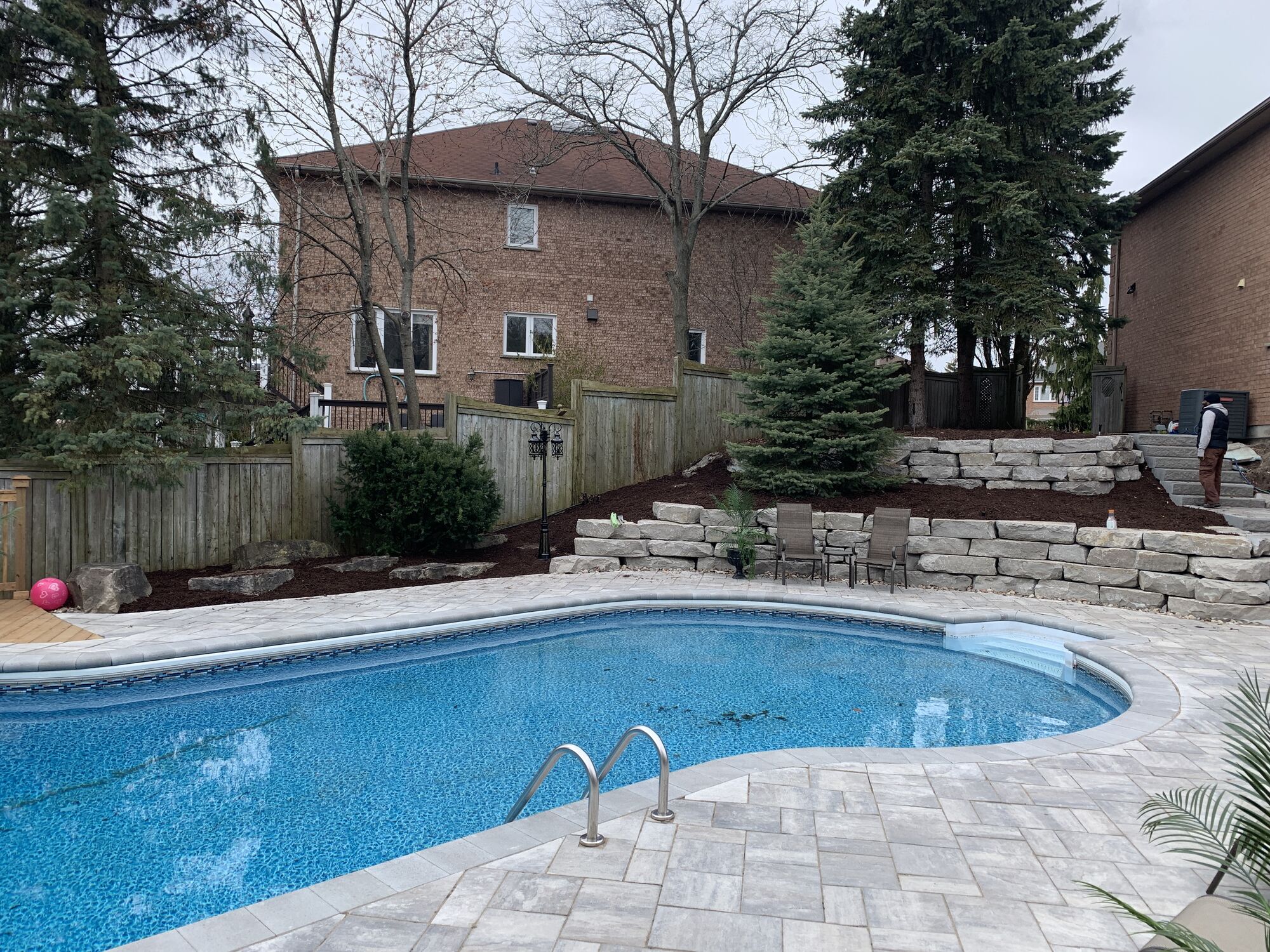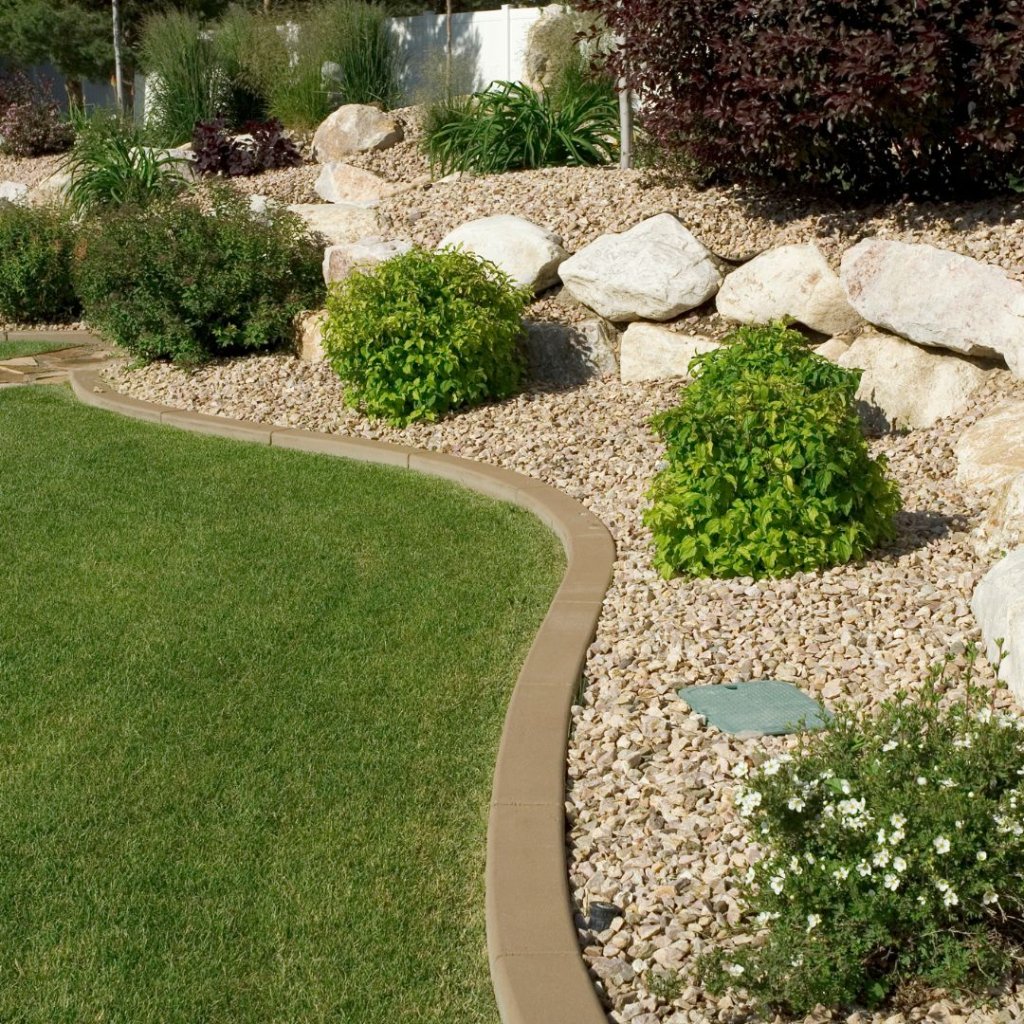
Landscape design in Oshawa starts with a walk around your property. Michael Durham Landscaping meets you on site to talk through layout, materials, plantings and budget, then designs and installs the finished yard. A good Oshawa design also has to fit the City's rules on how much of the front yard stays landscaped, how tall a hedge can be near the street, what can go on the boulevard and how to treat City trees, so we plan around those from the first sketch.
How Our Design and Installation Works
Design is part of our residential landscaping service. Every project includes an on-site consultation where we discuss layout, materials, plantings and budget, and there is no separate design fee: the design is included in the quote. From there we build to your brief, which might be low-maintenance beds, a pollinator garden or structured formal planting.
- Garden beds. Shaped beds with steel edging, triple-mix soil and plants selected for Durham's zone 5b/6a climate, such as hostas, daylilies, hydrangeas, ornamental grasses and boxwood.
- Lighting planned with the beds. Our landscape lighting is low-voltage LED, and when it goes in with a new garden the wiring is buried in conduit before the mulch goes down.
- Hard surfaces and walls. Patios, walkways and steps come from our interlocking and hardscaping work, and slopes can be levelled with retaining walls.
- Lawn and fencing. New lawn areas use our sod installation process, and fencing starts with a property survey review and a utility locate.
For layout ideas before your consultation, our guide to backyard landscaping ideas for Durham Region covers patios, planting and privacy.
Oshawa Rules That Shape a Landscape Design
Our landscaping in Oshawa page already covers the driveway, site alteration and tree basics. The points below are the ones that change how a design is drawn.
The City's definition of landscaping is broad
Oshawa's Landscaping and Grading page defines landscaping as "any activity that alters the visible features of a piece of land", including planting, grading, patios, fences, water features and structures. Fill placed for lawn dressing, landscaping, flower beds or vegetable gardens is exempt from the Site Alteration By-law only while the grade within 0.6 m of the property line stays the same, no swale or ditch is changed, drainage is not blocked and no more than 20 cubic metres comes in. A design that raises a bed against the lot line or reshapes a side yard swale moves out of that exemption, which our Oshawa hardscaping page explains in more detail.
Front yards stay at least half landscaped
The City's Driveways and Curbs page says driveways "cannot be more than 50% of your front yard area to maintain a 50% landscaped area". If the house has or will have a second or third unit, the Accessory Apartments page adds that at least 50% of the front yard and 50% of the exterior side yard must stay landscaped open space, plus 50% of the rear yard on a corner lot. It also requires a hard surface path at least 0.81 m wide from the apartment entrance to the street line. That path, the extra parking space and the planted area all have to fit on the same front yard plan.
Hedges, shrubs and fences near the street
Oshawa's Fence and Sight Triangle By-law treats hedges, shrubs and plants as "natural features". Within 2.0 m of the front lot line they may not exceed 0.9 m, and a fence anywhere in the front yard is held to 0.9 m. Inside a corner sight triangle (6.0 m from the corner) or a driveway sight triangle (3.0 m along the street line and the driveway edge), everything is limited to 0.9 m. Side and rear fences within 2.0 m of the lot line can reach 2.2 m. The City's Fences page notes that trees outside the sight triangles are exempt, and that there is no height limit on natural features beyond the first 2.0 m of the front yard. In practice, a privacy hedge belongs back from the sidewalk, and low planting goes beside the driveway.
Planting the boulevard
The Boulevard By-law lets owners landscape the boulevard next to their property, within limits. Where there is a sidewalk, nothing may sit within 0.6 m of either edge of it or within 1.2 m of the curb; with no sidewalk, nothing within 1.8 m of the curb. Plantings may not exceed 0.9 m in height, and the by-law prohibits adding any hard surface material or artificial turf to the boulevard. A design that runs a bed out to the curb, or edges the boulevard in stone, needs to be reworked before it is built.
Designing around City trees
The City's Trees page says residents may not prune or alter a City tree. For new City trees it advises keeping mulch about 10 cm from the trunk and avoiding landscape rings, brick borders or landscape fabric around the base, because these can change the soil grade and harm the tree. Residents can also request a new boulevard tree through Service Oshawa, and staff decide whether the spot is suitable. On private land, the page points to a subsidized backyard tree planting program run with LEAF.
Planting for Durham's watering rules
Durham Region's Water Efficiency page says odd-even day lawn watering is mandatory from May to September under the Regional by-law. It recommends keeping grass area to a minimum and putting the right plant in the right location so watering is only needed in long hot, dry spells. That is a good argument for planted beds and mulch in the parts of an Oshawa yard that are hard to water.
Rules change, so confirm the current requirements with the City of Oshawa and Durham Region before work begins.
Book a Landscape Design Consultation in Oshawa
Contact us to book an on-site consultation and a free quote for your Oshawa yard. We check the City's front yard, boulevard and hedge rules for your lot while we plan the design. For more projects around the city, see landscaping in Oshawa.
Sources: City of Oshawa, Landscaping and Grading; City of Oshawa, Driveways and Curbs; City of Oshawa, Accessory Apartments; City of Oshawa, Fence and Sight Triangle By-law 23-2014 (consolidated); City of Oshawa, Fences; City of Oshawa, Boulevard By-law 136-2006 (consolidated); City of Oshawa, Trees; Region of Durham, Water Efficiency.