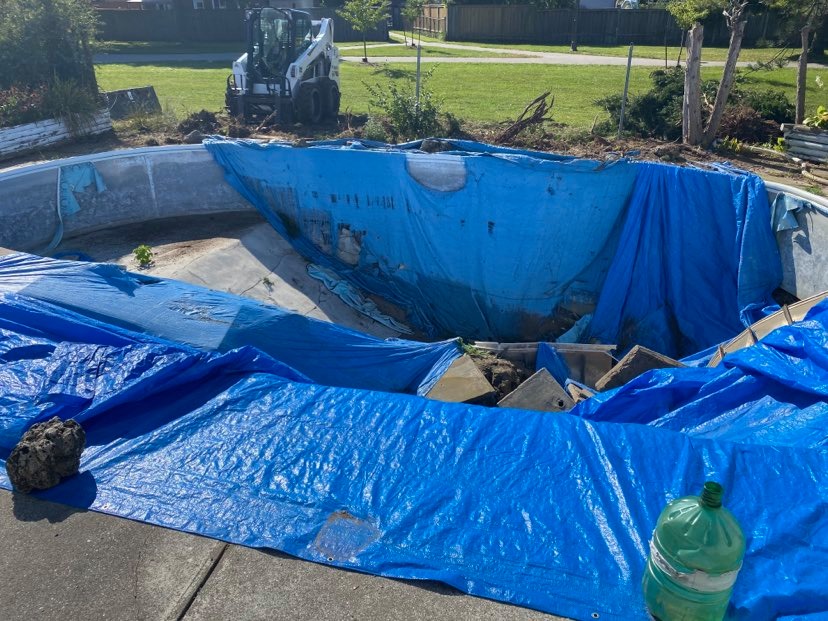
How much does it cost to remove an inground pool? We could not find a dated Canadian cost guide for this job, so the best published averages are American. Angi (updated October 12, 2026) puts full removal of an in-ground pool at US$4,000 to US$16,000 and a partial fill-in at US$2,500 to US$10,000. HomeGuide (December 8, 2025) gives US$4,300 to US$16,400 for full removal and US$2,000 to US$10,300 for a partial fill-in. These are US averages in US dollars, not Canadian prices and not Michael Durham Landscaping's prices. For exact pricing for your home, contact us for a free on-site quote.
This guide explains those averages, the difference between partial and full removal, how the hole is backfilled, what drives the cost, and the rules in Durham Region.
Published Average Costs for Inground Pool Removal
| Type of removal | Published average estimate | Source and date |
|---|---|---|
| Full removal, in-ground pool | US$4,000 to US$16,000 | Angi, updated Oct 12, 2026 |
| Partial fill-in, in-ground pool | US$2,500 to US$10,000 | Angi, updated Oct 12, 2026 |
| Full removal, 20 x 40 ft pool | US$6,100 to US$16,400 | Angi, updated Oct 12, 2026 |
| Partial fill-in, 20 x 40 ft pool | US$3,000 to US$10,300 | Angi, updated Oct 12, 2026 |
| Full removal, in-ground pool | US$4,300 to US$16,400 | HomeGuide, Dec 8, 2025 |
| Partial fill-in, in-ground pool | US$2,000 to US$10,300 | HomeGuide, Dec 8, 2025 |
Both guides use US data. Labour rates, disposal costs, the price of fill and HST are different here, so treat these figures as a rough starting point, not a Canadian quote. We have not converted them to Canadian dollars.
Both sources put a partial fill-in below full removal. Angi adds that pool size, pool material and access move the total within each range.
Partial vs Full Pool Removal
What happens to the shell
In a partial removal, the pool is drained, the top part of the shell is broken off, and the rubble is left in the cavity with fill on top. HomeGuide says filling the pool with its own demolished rubble plus dirt and topsoil is the cheapest method, but notes that some cities will not allow it. Angi says a partial removal leaves part of the pool in the ground and is not suitable for new buildings because of settling and drainage issues. It also says vinyl and fiberglass pools need full removal.
In a full removal, the whole shell comes out and the cavity is backfilled from the bottom up. This is the process on our pool removal service: concrete broken, rebar cut, and all materials hauled away and disposed of properly.
| Partial removal (fill-in) | Full removal | |
|---|---|---|
| What stays in the ground | Lower shell and broken rubble | Nothing from the pool |
| Published averages | Lower (see table above) | Higher (see table above) |
| Building on the area later | Angi says not suitable | Possible with engineered, compacted fill |
| Vinyl and fiberglass pools | Angi says full removal is needed | Yes |
Backfill and Compaction
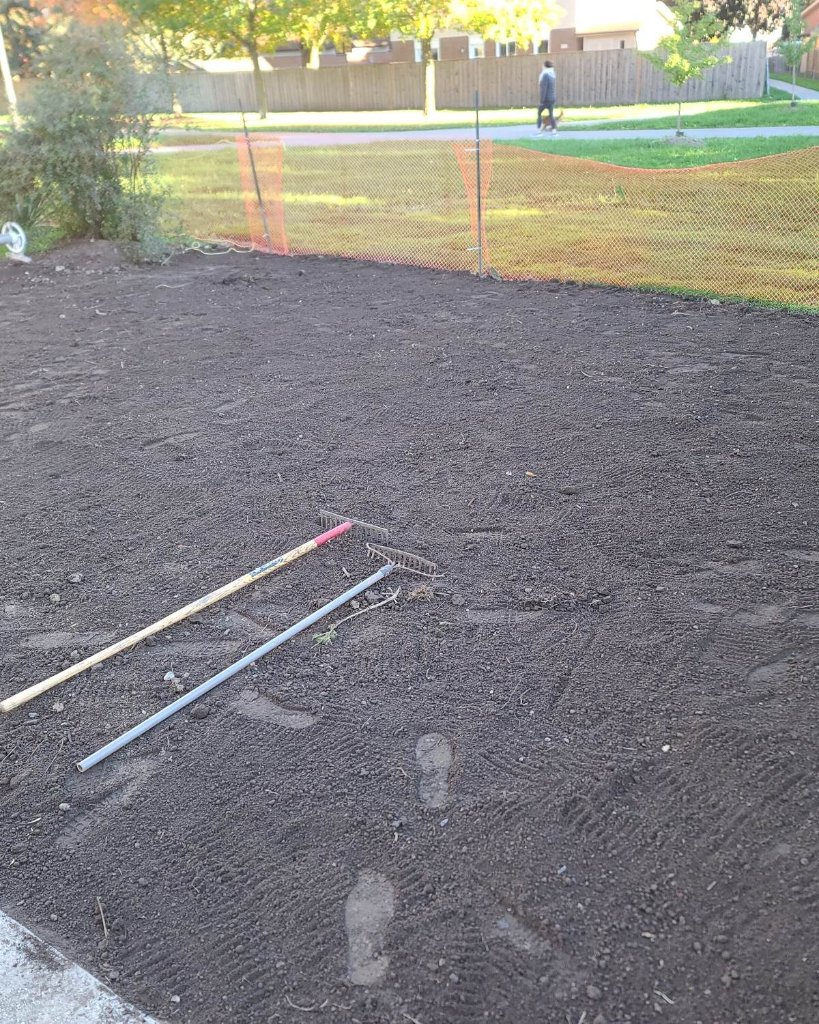
How the hole is filled decides whether the yard settles later. On our jobs, clean fill is placed in lifts and compacted to prevent future settling, so the ground is stable enough for future construction or landscaping. The final grade, topsoil, and sod or seed go on last.
HomeGuide recommends getting an engineer's demolition and compaction plan, and filling the space with 80% compacted fill material under 20% topsoil. Angi warns that gravel alone does not compact easily and can form sinkholes, and that local codes may require a structural engineer to oversee the backfill.
For scale, simple arithmetic shows that a pool 5 m by 10 m with an average depth of 1.5 m has a volume of about 75 cubic metres to fill. That matters because two Durham Region municipalities use 20 cubic metres as a threshold for fill rules (see the permits section below).
What Drives the Cost of Pool Removal
The site's own scope for a pool removal shows where the money goes:
- Permits and inspections. We handle municipal permit applications and inspections as part of the project.
- Demolition and hauling. Breaking concrete, cutting rebar and trucking it away is the heaviest part of a full removal. A partial fill-in hauls far less.
- Fill volume and type. Engineered fill, placed and compacted in lifts, costs more than loose material but is what keeps the area from sinking.
- Access. Angi notes that limited access for an excavator raises both time and cost. A narrow side yard or a fence in the way adds work.
- What surrounds the pool. Angi lists deck, patio and fence or enclosure removal as separate add-ons.
- Pool material and size. Angi's averages rise with pool size, and it notes that concrete and gunite pools need more demolition work than vinyl or fiberglass.
- The finish. Final grade, topsoil, and sod or seed. Our sod installation cost guide covers that part of the budget.
A typical in-ground pool removal takes us 5 to 7 days: demolition, debris haul, fill, compaction and turf restoration. Prices vary by property, so the averages above are only a guide. For exact pricing for your home or business, contact Michael Durham Landscaping for a free on-site quote.
Permits and Rules in Durham Region
Each municipality sets its own rules, and most are written around moving fill and changing the grade rather than pools.
| Municipality | What its own website says |
|---|---|
| Oshawa | No Site Alteration Permit is needed to fill in a pool if no work is done within 0.6 m of any property line, existing drainage patterns are not altered, and imported fill does not exceed 20 m3. If a demolition will change your grading, the City asks you to contact Engineering Services. |
| Whitby | The Site Alteration By-law covers grade changes and moving or placing fill. The Town uses a pre-screening questionnaire to decide whether work is exempt. Its Demolition Permits page says removing or demolishing a structure needs a permit. |
| Ajax | Property Standards By-law 46-2017 says a pool not kept in good repair must be drained and removed, and the depression filled with clean fill and left graded and level. |
| Pickering | Adding or removing more than 2 dump truck loads (20 cubic metres) may be subject to a Fill and Topsoil Disturbance Permit. Installing a pool is exempt; removal is not mentioned. |
| Clarington | A site alteration permit is needed before you place or dump fill or topsoil, remove soil or alter the grade, and no fill may be imported from outside Clarington. |
Ajax's Sediment and Erosion Control By-law 38-2021 exempts sites under 0.5 hectares, but still requires a permit to place fill within 30 metres of a body of water.
Draining the pool. Ajax's Property Standards By-law and Pickering's Nuisance By-law both say pool water must not drain onto neighbouring property. Our guide to fixing a wet yard in Durham Region explains where drain water is allowed to go in each town.
Before digging, the City of Oshawa reminds residents to call Ontario Dig Authority to locate underground utilities.
Rules change, so confirm the current requirements with your municipality before work starts, including whether anything is needed for the pool enclosure fence once the pool is gone. This is general information, not legal advice.
Selling a Home After Pool Removal
Buyers and their agents may ask what is under the lawn. The Real Estate Council of Ontario (RECO) explains in Bulletin 7.4 that a seller must disclose latent defects: defects that are not apparent on a reasonable inspection and would make a property unfit for habitation, dangerous or potentially dangerous. RECO also says the law of latent defects is complicated and that sellers with concerns should get a legal opinion.
We cannot tell you whether a past pool removal must be disclosed for your property. Ask your lawyer or real estate agent. Keeping the permit, the fill records and photos of the work makes those questions easier to answer. This is general information, not legal advice.
What the Yard Can Become
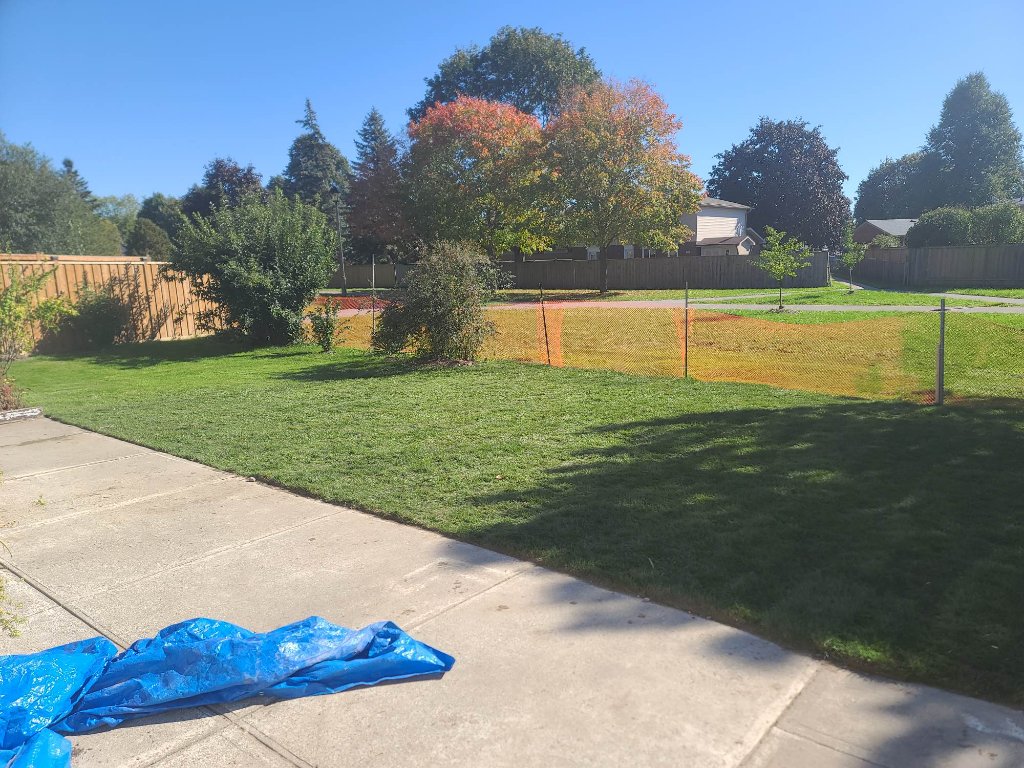
Once the fill is compacted and graded, the space is a blank slate. Lawn is the simplest finish: our pool removals end with topsoil and fresh sod or seed, and we also offer sod installation for other parts of the yard. If you would rather have a patio or walkway, our interlocking and hardscaping crews build on a compacted base. Grade the area so water runs away from the house; our post on proper grading around the house explains the slope you need. For more layouts, see our backyard landscaping ideas for Durham Region.
Common Questions
Is it cheaper to fill in a pool than remove it?
Usually, up front. Angi's published averages put a partial fill-in at US$2,500 to US$10,000 against US$4,000 to US$16,000 for full removal. The trade-off is that part of the pool stays in the ground, and Angi says the area is not suitable for new buildings.
Do I need a permit to remove a pool in Durham Region?
In most Durham Region municipalities, yes. The rules usually come from fill, grading or demolition by-laws, and they differ in Oshawa, Whitby, Ajax, Pickering and Clarington. We handle the application and coordinate any required inspections as part of the project.
How long does inground pool removal take?
A typical in-ground pool removal takes us 5 to 7 days. That covers demolition, debris haul, fill, compaction and turf restoration.
Can I build on the ground after a pool removal?
Yes, if the fill is properly engineered and compacted. We compact in lifts specifically so the ground is stable enough for future construction or landscaping.
Get a Free On-Site Quote
Every pool, yard and access route is different, which is why published averages only go so far. We handle the permits, full demolition, engineered fill and compaction, and finish with fresh sod or seed. Visit our swimming pool removal page, then contact us for a free on-site quote anywhere in Durham Region.
Sources: Angi, How Much Does Pool Removal Cost? (updated October 12, 2026, US data); HomeGuide, How Much Does It Cost to Remove or Fill in a Pool? (December 8, 2025, US data); City of Oshawa, Landscaping and Grading; City of Oshawa, Demolitions; Town of Whitby, Site Alteration; Town of Whitby, Demolition Permits; Town of Ajax, Property Standards By-law 46-2017; Town of Ajax, Sediment and Erosion Control By-law 38-2021; City of Pickering, Fill and Topsoil Permits; City of Pickering, Nuisance By-law; Municipality of Clarington, Site Alteration (Grading and Drainage); Real Estate Council of Ontario, Bulletin 7.4: Facts a seller has a legal obligation to disclose.